Every Vietnamese city has its noodle, and Hue’s bowl is the loud one: fiery red oil, stalks of lemongrass, thick rice vermicelli and a broth with a depth that pho does not attempt. Bun bo Hue is the city’s signature dish, eaten here at breakfast, lunch and late night, and learning to eat it properly is one of the best travel decisions you will make this year.

What Makes Bun Bo Hue Different
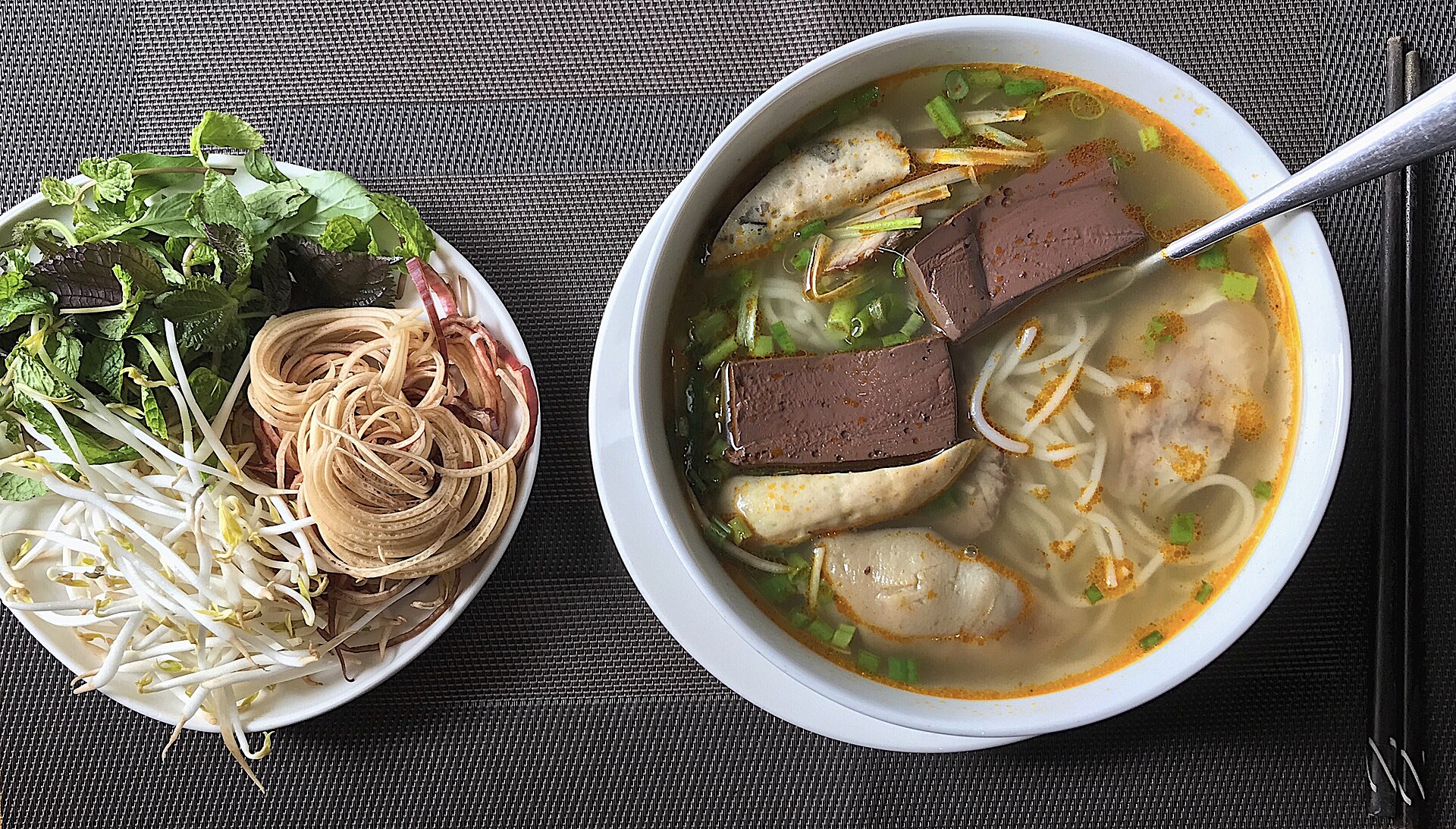
Three things define the bowl. First, the broth: beef bones simmered with lemongrass, fermented shrimp paste (mam ruoc) and annatto-seed oil, which gives the soup its unmistakable chilli-red colour and a fragrance pho never has. Second, the noodles: thick, round rice vermicelli with a bite, not the flat silk of pho. Third, the toppings: beef shank and brisket, cubes of pork-blood cake for the brave, and cha, a springy pork-loaf slice, all finished at the table with herbs. The result is spicy, savoury and slightly funky, the flavour of Hue itself.
Anatomy of a Proper Bowl
Order “bun bo” and watch what arrives: a deep bowl of broth over noodles, meat arranged on top, and a plate of fresh greens alongside. Here is the local method: taste the broth first, plain. Then add banana blossom shreds, sliced water mint, rau ram and bean sprouts a handful at a time, squeezing in lime between additions. Spoon chilli oil in quantities you can survive, not quantities you admire. Tear the herbs, do not chop; stir from the bottom so the paste flavour spreads evenly. The side dish of raw vegetables is not decoration, it is the balancing instrument.
Where to Eat It Near the Hotel
The good news for guests of Thanh Lich Royal Boutique: great bowls surround 33 Hai Ba Trung. Start with the hotel’s own breakfast noodle station, praised in dozens of verified reviews, a safe introduction with a lighter broth. Then walk out: the Dong Ba Market food court five minutes away serves market-standard bowls in the mornings, and the lanes around the hotel and the Hai Ba Trung walking street fill from early morning with noodle shops where locals line up before work. Follow the queues, not the signs; a full table of locals at 7am is the only star rating that matters. Prices typically run VND 25,000-50,000 per bowl, and our dining guide covers the hotel restaurants for the days you want table service instead.
When to Eat It
Locals eat bun bo for breakfast, and broth quality genuinely peaks before 9am when the pot is fresh. A second window opens around 11:30 for lunch. Late-evening bowls exist in night-market areas, but the morning ritual is the authentic one, and it slots neatly before the citadel morning in our 3-day itinerary. Round off the food education with che Hue royal desserts for the sweet course.
Stay where the noodle queue is five minutes from your bed.
Frequently Asked Questions
Is bun bo Hue very spicy?
It is spicy by pho standards, but you control the heat: chilli oil and fresh chilli are added at the table, and a lighter bowl is always possible.
What is the difference between bun bo Hue and pho?
Bun bo uses thicker round noodles, a lemongrass and shrimp-paste beef broth with red chilli oil, and richer toppings; pho is a flat-noodle soup with clear, gentle broth.
How much does a bowl cost in Hue?
Typically VND 25,000-50,000 at local shops, more in hotels or sit-down restaurants; the hotel breakfast noodle bar is included with buffet.
When is the best time to eat bun bo Hue?
Morning, before 9am, when the broth is freshest and locals fill the shops; a second peak arrives at lunch.