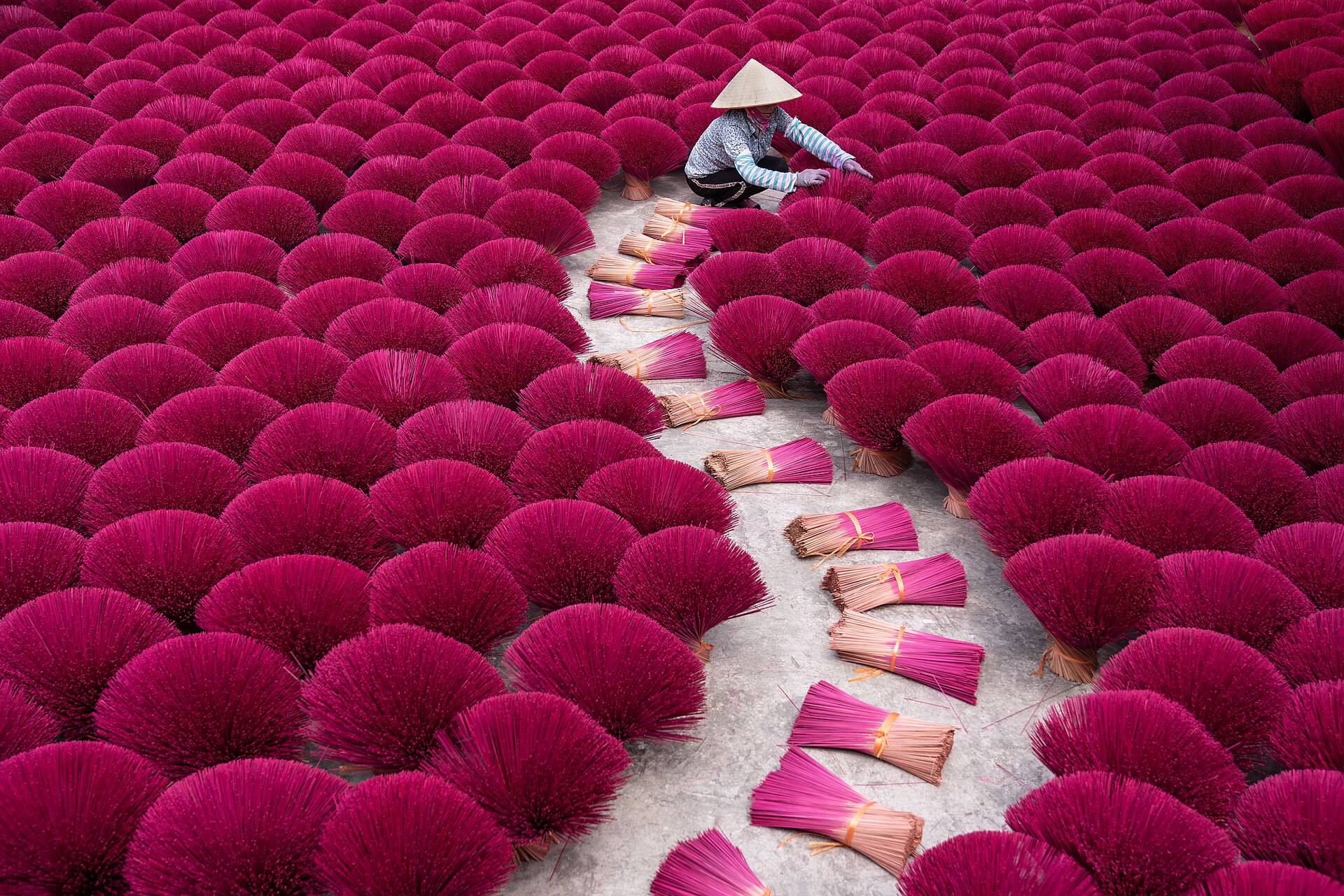
Before Hue was a capital of emperors, it was a city of makers: bronze founders, incense rollers, hat weavers and painters whose workshops fed the court for generations. Those villages still work today, and they are some of the most photogenic, humbling half-day trips you can take from Thanh Lich Royal Boutique Hotel. This guide covers the four worth knowing and how to visit them well.

Thuy Xuan Incense Village
The closest and most famous stop, Thuy Xuan lies on the city’s south-western edge, roughly 4-7 kilometres from the hotel depending on the workshop you visit. Families have rolled incense here for centuries, and the drying yards with their fan-shaped bundles of red and yellow sticks have become one of Vietnam’s most photographed scenes. Beyond the photo, look for a working yard: watch the roller cut and curl incense spirals, ask about the fragrances (each blend combines wood powders and flower essences), and buy directly from the maker. A handful of yards charge a small photo fee; it is fair payment for their stage.
Conical Hat Workshops
Every Vietnamese schoolgirl’s white “ao dai” photo and every market stall owes itself to the non la, the conical hat. Around Hue, small village workshops still sew palm leaves over bamboo rings, 16 radiating hoops in the finest versions, a craft that takes years to master. A half-hour visit shows the whole process from leaf selection to the final oil sheen; a finished, handmade hat costs more than market versions but will last years and fits properly. Ask the hotel tour desk for the workshop currently open to visitors, as availability rotates with seasons and family schedules.
Phuong Duc Bronze Casting
On the south bank of the Perfume River, the Phuong Duc neighbourhood has cast bronze since the Nguyen court needed bells, tripods and ancestral urns. Walk the lanes and you will smell the sand moulds and hear the polishers; some family workshops keep small showrooms where cast vases, gongs and Buddha statues are finished by hand. If you have ever wondered how a temple bell gets its voice, this is the place to ask. It combines naturally with the riverside walks in our French-colonial architecture guide.
Sinh Folk Paintings and Thanh Tien Paper Flowers (Day-Trip Tier)
For deeper travellers: Sinh village north of the city produces woodblock folk paintings on do paper, blessed at Tet for luck, while Thanh Tien near the river makes delicate paper flowers, a Tet tradition. Both sit further out (30-60 minutes by car), so treat them as a dedicated half-day excursion or part of a countryside cycling loop. Our Tam Giang lagoon guide routes past the same north-western countryside.
The Half-Day Loop That Works
Leave the hotel at 08:30 by Grab or taxi: Thuy Xuan incense (1 hour), conical hat workshop (30-45 minutes), Phuong Duc bronze (45 minutes), lunch back at Huong Ngu restaurant, then Dong Ba Market for anything you missed. Full logistics, distances and sequencing fit neatly into Day 3 of our 3-day Hue itinerary.
A hotel close enough to fit living heritage into a morning. See rates before you pack an empty suitcase.
Frequently Asked Questions
Which craft village is closest to the hotel?
Thuy Xuan incense village on the south-western edge of the city, about 4-7 kilometres from Thanh Lich Royal Boutique Hotel.
Can I buy authentic conical hats in the villages?
Yes. Handmade hats cost more than market versions but are properly fitted and durable; buy directly from the workshop.
Do I need to book a tour for the craft villages?
No. A taxi or Grab circuit covers Thuy Xuan, hat workshops and Phuong Duc easily; tours add fixed schedules and context.
Is photography allowed in the villages?
Usually yes, but ask first, especially of people and working areas; some incense yards charge a small photo fee.